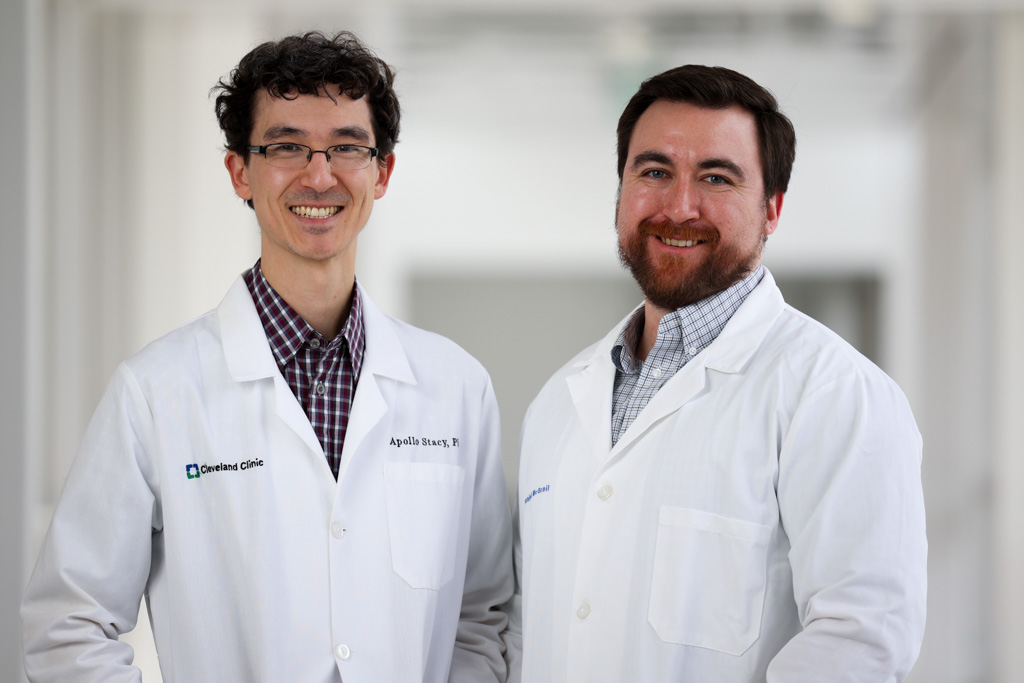
“Because of VeloSano, I am able to embark on exploratory scientific adventures and take that investment from donors and hopefully create better therapies for patients.” - Dr. Stacy
Co-Investigator
A common bacterium in your mouth linked to gum disease also shows up in different types of tumors. Recent research has found that many cancers, especially those in the digestive tract, are home to bacteria. One of the most common is Fusobacterium nucleatum (Fn), a normal resident of the oral microbiome.
Fn has also been identified in cancers of the mouth, esophagus, stomach and colon. Even more concerning, it may help tumors resist therapy. This has led researchers Apollo Stacy, PhD, and Daniel McGrail, PhD, to investigate how and why Fn thrives in the tumor environment with the hope of improving cancer treatment.
“There’s such a huge diversity of bacteria in the oral cavity,” says Dr. Stacy. “However, we are working to better understand why certain ones end up in tumors and seem to love being in that environment. If we can better understand that, then we can better target those bacteria and improve treatment.”
This collaboration brings together two distinct areas of expertise: Dr. Stacy’s background in microbial functional genomics and Dr. McGrail’s focus on cancer systems biology. Together, their goal is to understand both sides. It’s the kind of integrative research that can only take place in academic medical centers like Cleveland Clinic.
“I don’t think this would have happened at most other places—this sort of partnership,” says Dr. Stacy. “Being closer to translation is a dream as a basic scientist. The closer you can get to an actual impact, the better you feel about the research being done.”
VeloSano fuels early-stage research like this, helping scientists explore bold ideas that could lead to breakthroughs in cancer treatment. Both Dr. Stacy and Dr. McGrail know the value of what even $1 has on the cancer community.
“The actual impact of every dollar is going to be much higher as it leads to larger funding,” says Dr. McGrail. “It’s a multiplication factor. You’re not just giving one dollar. You’re giving that one dollar, which then gives someone $10, $50 or even $100 down the road.”

100% For The Cure