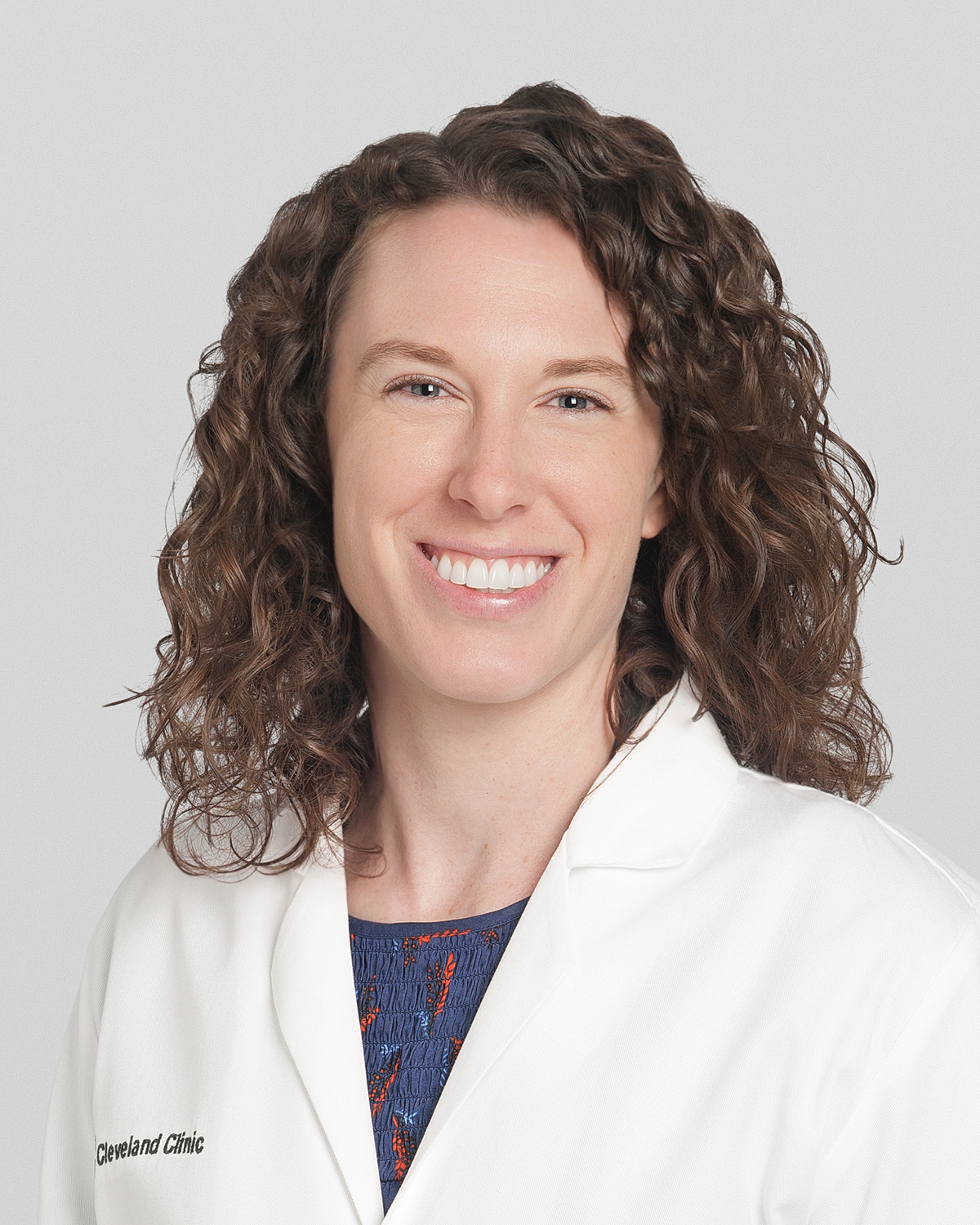
“The VeloSano Pilot Grant gave me the opportunity to revisit an idea with potentially substantial implications for cancer prevention — one we didn’t really have an avenue to pursue otherwise. We had the right people and the motivation; we just needed that extra support to get the ball rolling.”
Although screening has improved dramatically in recent years, colorectal cancer still remains one of the most common cancers. That reality highlights the need for new, creative ways to prevent the disease before it develops. Stephanie Schmit, PhD, MPH, an epidemiologist at Cleveland Clinic, is exploring an idea that could impact anyone who drinks a cup of coffee every day.
Coffee is one of the most widely consumed beverages in the world, but research on whether it may lower colorectal cancer risk has been a mixed bag. In collaboration with Matthew Devall, PhD, at the University of Virginia, Dr. Schmit is working to determine whether coffee truly offers protection, and, if it does, to understand the biology behind it.
With VeloSano support, Dr. Schmit and her team are assembling one of the largest datasets ever used to study coffee and colorectal cancer risk. They are combining information from more than 50 studies and over 130,000 people, including major resources such as the Genetics and Epidemiology of Colorectal Cancer Consortium and the Colon Cancer Family Registry. Because coffee intake has been measured in so many different ways over the years, their first task is to standardize and analyze the data so it can be combined meaningfully across studies.
“We’re pulling together data from all of these different studies to curate and harmonize it,” says Dr. Schmit. “There have been so many different tools and questionnaires used across the world over the last few decades. This work will allow us to conduct one of the largest association studies to determine, at a population scale, whether coffee consumption is associated with lower risk of colorectal cancer.”
The project also includes a laboratory component. Together with Dr. Devall, the team is studying how coffee affects colon organoids — tiny “mini‑guts” grown from healthy volunteers. By exposing these organoids to different amounts of coffee for different amounts of time, they can observe which genes turn on or off in response, offering insight into the biological pathways coffee may influence.
“This approach will help us understand what biological functions and systems are being affected,” says Dr. Schmit. “We can see which genes are overexpressed or underexpressed once there’s exposure to coffee. It’s truly a combined population‑science and mechanistic study.”
Dr. Schmit has also participated in Bike to Cure, an experience she describes as both energizing and grounding. “It’s an amazing experience, and you get such a sense of community, but it also brings you back to the purpose of it all and why we’re doing this work,” says Dr. Schmit. “VeloSano is essential in order for us to be able to pursue the most innovative science, especially in the current funding environment. It allows us to think outside the box and get earlier-phase concepts off the ground.”

100% For The Cure

We use cookies to improve your browsing experience, analyze website traffic, and personalize content. By clicking “Accept All” you consent to our use of cookies. You can manage your preferences at any time. See our Privacy Policy.
We use cookies to run this site and, with your permission, to analyze traffic and personalize content. Choose which cookies to allow. See our Privacy Policy.
Required for the website to work. Always active.
Lets us measure website traffic and personalize content through Google Analytics. Nothing loads until you allow it.