“Thank you so much for being a part of the VeloSano community. It’s so appreciated by me and by the members of my laboratory, and we can guarantee that your investment in us will give a wonderful return.”
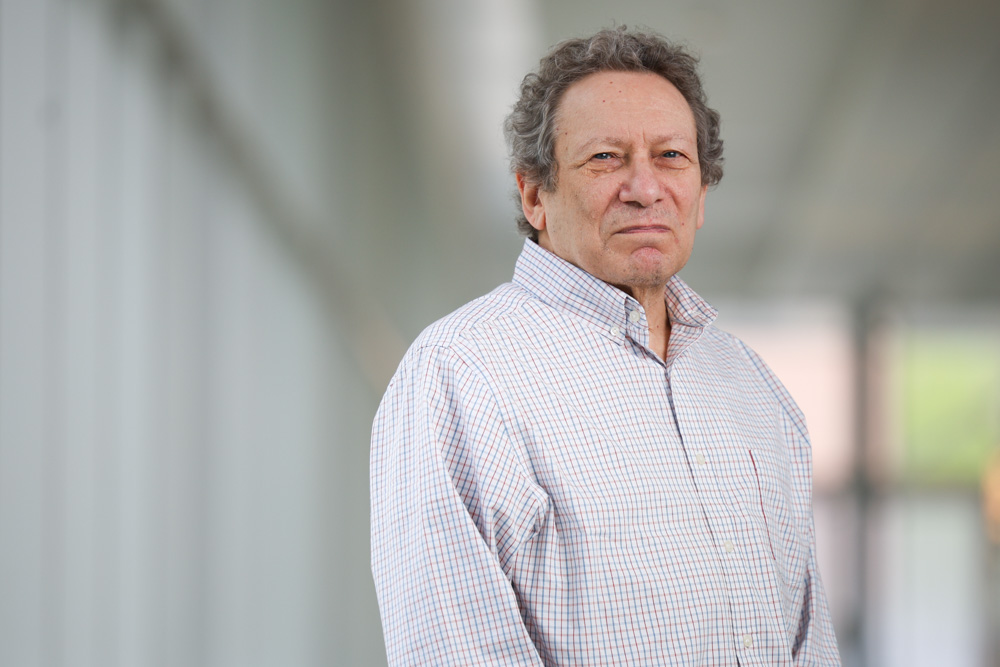
For more than four decades, Paul Fox, PhD, has dedicated his career at Cleveland Clinic to understanding how healthy cells transform into cancer. His newest VeloSano‑funded project focuses on one of the biggest mysteries in cancer biology: what triggers ordinary cells to become cancer stem cells, the small but powerful group of cells that can drive tumor growth, spread and resistance to treatment.
“We know a lot about what cancer stem cells do,” says Dr. Fox, who is staff in the Department of Cardiovascular and Metabolic Sciences at Cleveland Clinic and the Robert Canova Endowed Chair in Inflammation Research. “What we don’t know is what induces them — what flips the switch that turns a normal cell into a dangerous one. That’s what we’re working on now.”
His team has discovered that a protein called EPRS1 may be one of those switches. Although EPRS1 is best known for helping cells interpret the genetic code, Dr. Fox’s lab has found that it also plays a surprising second role by activating key genes that give cancer stem cells their power.
In breast cancer cells, when EPRS1 moves into the nucleus — the cell’s control center — those stem‑cell‑like genes switch on. When researchers block EPRS1 from entering the nucleus, those genes drop dramatically. This discovery opens the door to a completely new class of cancer therapy.
“The main goal of this VeloSano Pilot Grant is to come up with a therapeutic that blocks EPRS1 from going to the nucleus,” Dr. Fox says. “No one has done this before. It will be very important not only for breast cancer, but it would also serve as a paradigm for many other diseases where proteins enter the nucleus and cause harm.”
Because EPRS1 is essential for normal cell function, the team isn’t trying to eliminate it — only to block its harmful nuclear activity. Instead of traditional small‑molecule drugs, they are designing specialized peptides that can disrupt the region of the protein responsible for nuclear entry. Dr. Fox is now refining an early version of a peptide with the goal of improving how effectively it enters cells.
Dr. Fox has received VeloSano Pilot Grants before, so he understands firsthand how essential cancer research fundraising is. It’s one of the many reasons he proudly supports Bike to Cure — volunteering along the route, cheering riders on and celebrating every milestone.
“I go out there and ring the cowbell,” says Dr. Fox. “I really appreciate all of the VeloSano donors and riders. As a donor myself, I hope they feel as much joy in giving as I do. They should feel proud with VeloSano because it’s a great investment into science.”

100% For The Cure
We use cookies to improve your browsing experience, analyze website traffic, and personalize content. By clicking “Accept All” you consent to our use of cookies. You can manage your preferences at any time. See our Privacy Policy.
We use cookies to run this site and, with your permission, to analyze traffic and personalize content. Choose which cookies to allow. See our Privacy Policy.
Required for the website to work. Always active.
Lets us measure website traffic and personalize content through Google Analytics. Nothing loads until you allow it.