“VeloSano gets funding where it’s needed to keep research moving forward. The faster we can get research started and get these answers, the faster we can translate that into improved patient outcomes and experiences.”
For patients with chronic myeloid leukemia (CML), treatment today looks very different from what it did a generation ago. It was once considered a life-threatening blood cancer, but it has become much more manageable thanks to many targeted therapies, like the drug imatinib. With more treatment options, though, comes a new challenge.
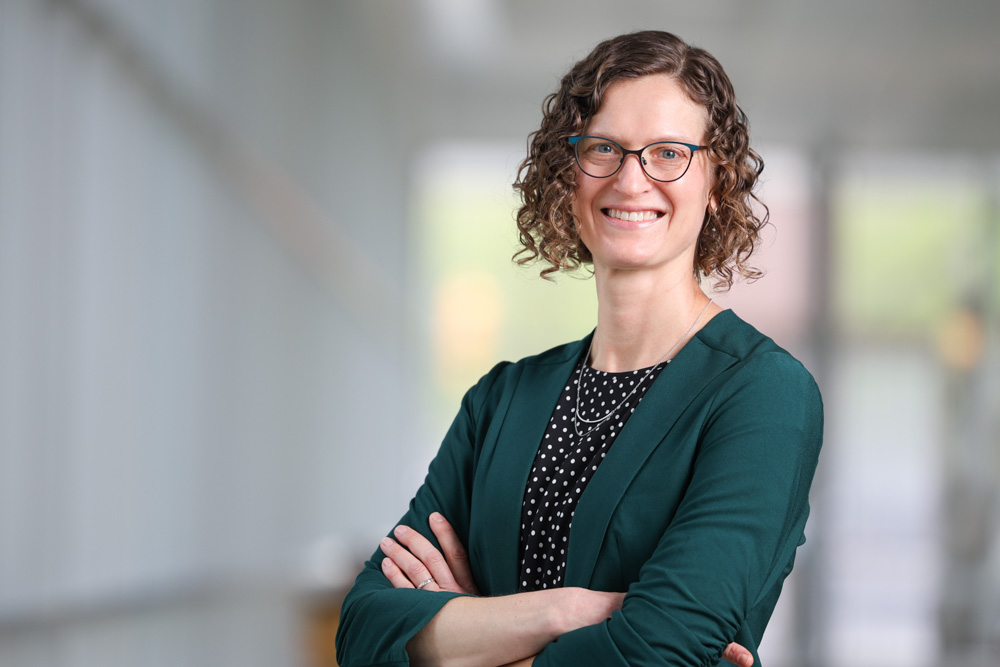
As patients move into later lines of therapy, there’s little evidence to guide which treatment should come next. With support from her first VeloSano Pilot Grant, Emily Zabor, DrPH, a cancer biostatistician at Cleveland Clinic, is working to fill that gap by generating the estimates needed to point clinicians in the right direction.
“Our goal is to use the data we have here at Cleveland Clinic, where some patients have received up to 20 lines of therapy for this disease, to give practical recommendations so that the clinicians and the patients can make more evidence-based decisions on what treatment to use next,” says Dr. Zabor.
Real‑world data comes with complications, however. Unlike clinical trials, patients aren’t randomly assigned to treatments. Their choices are shaped by side effects, prior therapies, patient preference, provider preference and individual characteristics.
“The challenge is that in real‑world data, there are possible biases because patients aren’t randomized to the treatment they’re receiving,” says Dr. Zabor. “We need statistical methods that allow for fair comparisons.”
Her project has two main objectives: to apply advanced statistical methods to Cleveland Clinic’s CML data to generate practical, evidence‑based guidance for later‑line treatment decisions and to develop software that makes these methods accessible so researchers around the world can use them in the future. By tackling these statistical challenges, she hopes to produce insights that lead to more effective treatments and better patient outcomes — progress made possible by VeloSano.
“From the time that someone has an idea, applies for a VeloSano grant and can get the money and start working on their project, it is a very short timeline, which is unique in the world of research funding,” says Dr. Zabor. “That’s one of the things that really motivates me to be involved and ride in Bike to Cure to help raise those funds for the research being done here at Cleveland Clinic.”

100% For The Cure
We use cookies to improve your browsing experience, analyze website traffic, and personalize content. By clicking “Accept All” you consent to our use of cookies. You can manage your preferences at any time. See our Privacy Policy.
We use cookies to run this site and, with your permission, to analyze traffic and personalize content. Choose which cookies to allow. See our Privacy Policy.
Required for the website to work. Always active.
Lets us measure website traffic and personalize content through Google Analytics. Nothing loads until you allow it.