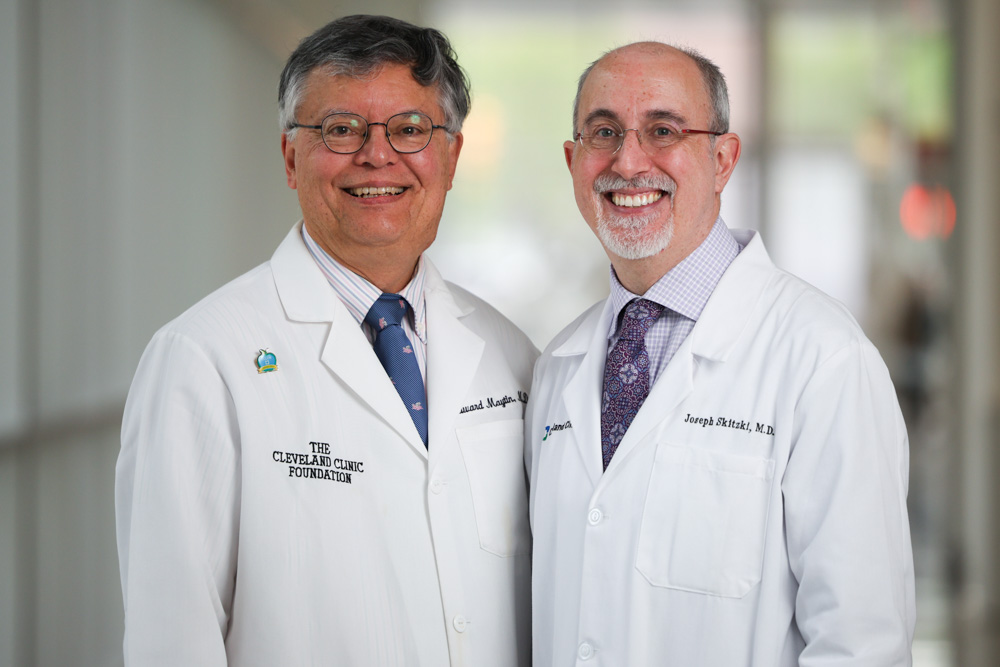
“VeloSano is a source of support that you can't get anywhere else and especially at this critical time. With VeloSano, we can begin to build up the preliminary data and experience needed to be successful in applying for larger grants.” - Edward Maytin, MD, PhD
Co-Investigator
For patients with malignant melanoma, one of the most important steps in determining how the cancer may behave is the sentinel lymph node (SLN) biopsy. This procedure helps doctors learn whether melanoma cells have spread from the original tumor to nearby lymph nodes. While highly informative, SLN biopsy requires injecting a radioactive tracer, surgically removing lymph nodes and waiting days for pathology results.
Edward Maytin, MD, PhD, and Joseph Skitzki, MD, are leading a VeloSano‑funded project to test a noninvasive imaging technique that could identify cancer‑involved lymph nodes without surgery. The method uses a small dose of an FDA‑approved drug that boosts levels of protoporphyrin IX, a naturally occurring molecule that emits fluorescent light in low‑oxygen tissues.
“If a patient has a lymph node that might contain cancer cells or inflammatory cells, those guys are going to use up more oxygen, making the fluorescent signal even more intense,” says Dr. Maytin, Section Head of Molecular Dermatology at Cleveland Clinic. “We’re thinking of translating this into the clinic. This project is focused on melanoma, but it could be applicable to many other cancers.”
This new technique could offer a non‑radioactive way to quickly identify metastasis‑containing lymph nodes in real time. That could help prevent unnecessary removal of multiple nodes, a major cause of lymphedema, by focusing the pathology evaluation only on those nodes most likely to contain cancer. Faster diagnosis would eliminate delays in starting life‑saving therapy.
“If there is a noninvasive way to determine if a lymph node has evidence of melanoma or other cancers, that would be absolutely amazing,” says Dr. Skitzki, Director of Melanoma and Cutaneous Oncology Surgery at Cleveland Clinic. “The patient could potentially be spared an invasive procedure and general anesthesia. And you can use that information to guide treatment.”
Looking ahead, the implications could be even broader. “If we can validate that we can detect positive lymph nodes without removing them, it could really influence the surgeries we do, where we do them and how they’re done,” says Dr. Skitzki. “This would be another potential avenue to de‑escalate treatment.”
Events like Bike to Cure play a critical role in fueling research, giving scientists like Dr. Maytin and Dr. Skitzki the resources they need to explore new ways to diagnose and treat cancer. Dr. Maytin has become a big supporter of the event. “It’s a lot of fun,” says Dr. Maytin. “The night before the ride feels like a festival — great food, tents, music. There’s an incredible energy.”
Dr. Skitzki underscores just how essential donor support is to moving ideas like this forward. “Thank you to the donors,” says Dr. Skitzki. “You accelerate ideas and make research possible that otherwise wouldn’t happen, especially for clinicians and scientists trying to bring new approaches into the clinic. It’s difficult to do this outside of philanthropy. You truly make things happen.”

100% For The Cure

We use cookies to improve your browsing experience, analyze website traffic, and personalize content. By clicking “Accept All” you consent to our use of cookies. You can manage your preferences at any time. See our Privacy Policy.
We use cookies to run this site and, with your permission, to analyze traffic and personalize content. Choose which cookies to allow. See our Privacy Policy.
Required for the website to work. Always active.
Lets us measure website traffic and personalize content through Google Analytics. Nothing loads until you allow it.